A crown covers the whole visible part of a tooth, restoring its shape and holding it together. It is more involved than a filling, and it is not the answer to every damaged tooth. Knowing when a crown genuinely adds protection, and when something smaller will do, helps you ask better questions about the treatment you are offered.
The Principle Behind a Crown
Think of a tooth as a shell. Enamel and dentine form a structure that flexes slightly under biting forces and holds its shape. Every time part of that shell is lost to decay, a fracture or drilling, the remaining walls become thinner and more likely to flex, crack or split.
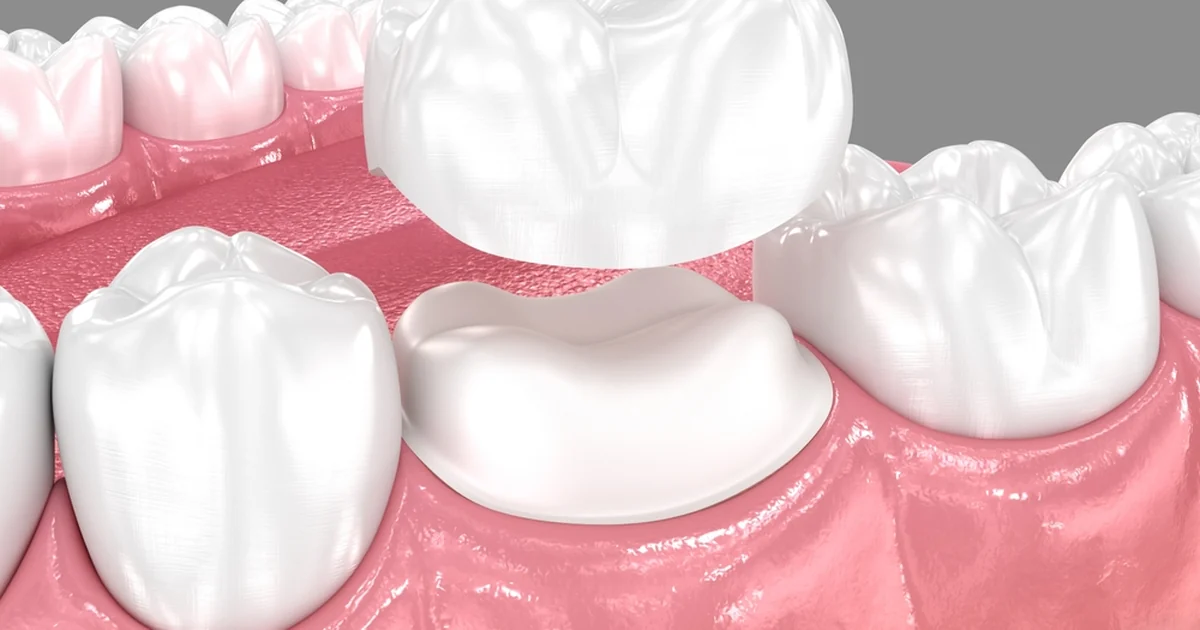
A filling replaces missing material within the shell. A crown replaces the shell itself, wrapping the tooth so that biting forces are distributed rather than concentrated on weakened walls. That is the essential difference, and it explains most of the situations below.
Situations Where a Crown Is Usually Recommended
A Large Amount of Tooth Is Missing
When decay or an old restoration has removed much of the tooth, and only thin walls of natural tooth remain, a filling has little structure left to support it. The same applies to a tooth with several fillings, or one where the filling is now larger than the natural tooth around it. If further repairs would weaken the tooth to the point where problems are likely in the near future, crowning it protects the remaining walls from splitting.
The Tooth Has Cracked
Cracks in back teeth are common and often show up as pain when biting or releasing your bite. A crown holds the segments together and can prevent a crack from propagating towards the root, where the outlook becomes much poorer.
After Root Canal Therapy
Teeth that have had root canal therapy have usually lost significant structure and can become more brittle. A crown is often recommended afterwards, particularly on back teeth, to reduce the risk of fracture. It also seals the top of the tooth, which helps keep bacteria from re-entering the treated canals, and spreads chewing forces across the whole tooth.
A Cusp Has Broken Off
A broken tooth where part of the chewing surface has snapped, often beside a large old filling, usually needs the cusp replaced and the tooth protected rather than simply patched.
Heavy Wear
Where grinding and clenching has worn teeth down significantly, crowns are sometimes part of restoring function and height, alongside a night splint to protect the new work.
On an Implant, or as Part of a Bridge
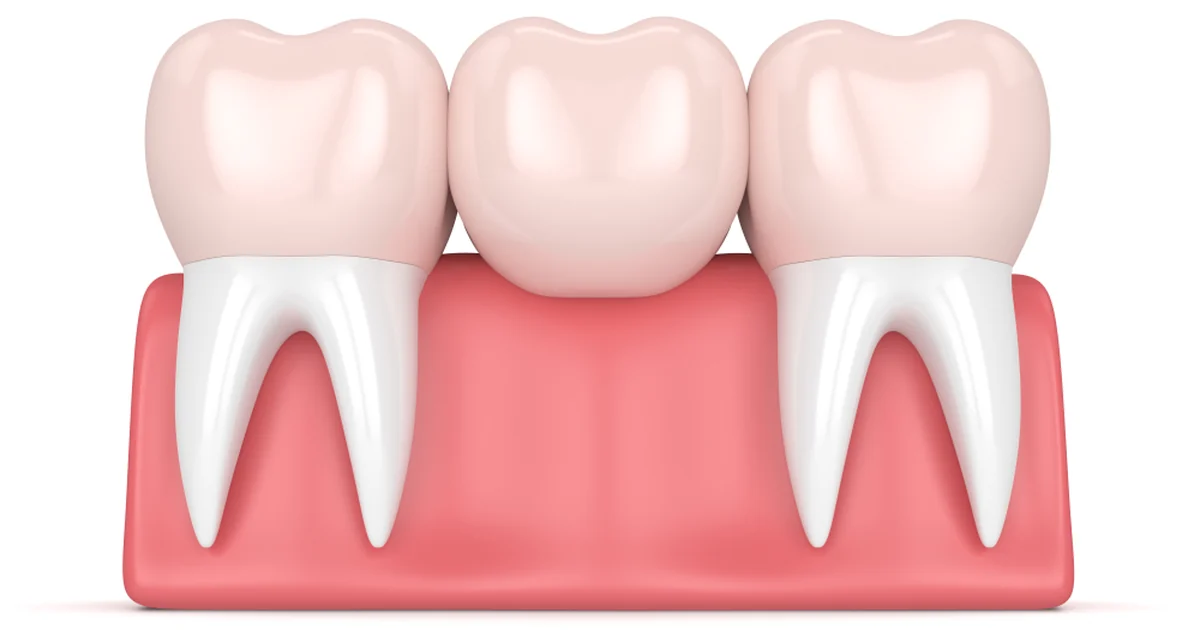
A dental implant replaces only the root of a missing tooth, so a crown is fitted onto it to complete the visible tooth. Crowns on the teeth either side of a gap also support a bridge.
To Anchor a Partial Denture
A removable partial denture relies on natural teeth to hold it in place. Where those teeth are damaged or not shaped to support the denture's clasps and rests, crowning them can create a stronger, better-shaped anchor.
Cosmetic Changes Where Veneers Are Not Suitable
Crowns can change the colour, shape and apparent alignment of a tooth. For many cosmetic concerns, veneers are the more conservative option, but a crown may be preferable where a tooth is also heavily filled or weakened, or where heavy grinding would place a veneer at greater risk.
When a Crown May Not Be Needed
A crown is not automatically the right choice. Where enough healthy tooth remains, a well-placed white filling may restore the tooth perfectly adequately, and it is more conservative.
An inlay or onlay sits between the two: a custom-made ceramic restoration that replaces part of the chewing surface without covering the entire tooth. It preserves more natural structure than a full crown while offering more support than a filling.
For a front tooth with a cosmetic concern but sound structure, veneers or bonding may be more appropriate, since they remove far less tooth. If you are told you need a crown and are unsure, it is entirely reasonable to ask what would happen if you chose a smaller restoration, or to seek a second opinion.
What the Treatment Involves
After examining the tooth and taking digital X-rays, we explain the recommendation and provide a quote. On the day, local anaesthetic is given, decay and old filling material are removed, and the tooth is shaped to make room for the crown. A digital scan then records the prepared tooth.
With CEREC same-day crowns, many ceramic crowns can be designed and milled in the practice and fitted at the same appointment, which avoids a temporary crown and a second visit. Other cases are made by an Australian dental laboratory, with a temporary crown fitted in the meantime.
At the fitting, we check the contacts with neighbouring teeth, the bite and the appearance before the crown is cemented or bonded in place.
Looking After a Crowned Tooth
A crown protects the tooth but does not make it immune to problems. Decay can still develop where the crown meets natural tooth, and the gum around it can become inflamed. Brush twice daily, clean between your teeth every day, avoid biting very hard objects, and wear a splint if you grind. Regular check-ups let us monitor the margins and the health of the surrounding gum.
Like all restorations, crowns have a finite lifespan and may eventually need replacing.
Questions Worth Asking Before You Agree
It is entirely reasonable to slow a crown recommendation down and ask a few questions first:
- How much natural tooth is left, and what is the concern if we wait?
- Would an onlay or a large filling be a realistic alternative here?
- What is the expected cost, including any core build-up or root canal therapy that may be needed?
- Will this tooth need anything else afterwards, such as a night splint?
- What are the signs that the crown is failing, and what happens then?
A good clinician will welcome these questions. If a tooth is cracked and symptomatic, there may be a genuine reason to act promptly, and we will explain that reasoning rather than simply asserting it.
Talk to Us About Your Tooth
If you have been told you need a crown, or you have a tooth that is cracked, heavily filled or sensitive when you bite, we are happy to assess it and explain your options. Call Precision Dental on (07) 3852 1160 or book online.