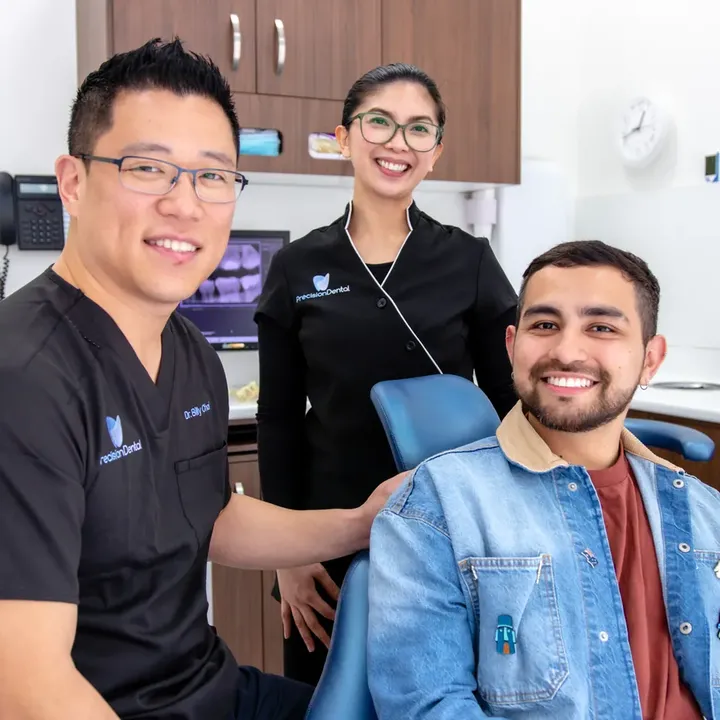
Grinding and Clenching Treatment in Fortitude Valley
Many people grind or clench their teeth without realising it, often while they sleep or during periods of concentration or stress. Over time, this habit can wear teeth down, cause cracks and lead to jaw pain, headaches and sensitivity.
At Precision Dental, we look for the signs of grinding and clenching during your examination and can recommend ways to protect your teeth.
What Are Grinding and Clenching?
Grinding and clenching are known as bruxism. Grinding involves moving the teeth against one another, while clenching involves pressing the teeth firmly together. Both place considerable force on the teeth, jaw joints and muscles.
Bruxism can occur during sleep or while awake. It is associated with factors such as stress, anxiety, sleep disorders including sleep apnoea, certain medications, caffeine, alcohol and smoking.
Is Treatment Right for You?
You may benefit from an assessment if you notice:
- Flattened, worn or chipped teeth
- Tooth sensitivity or cracked teeth
- Aching jaw muscles, particularly on waking
- Morning headaches or tension around the temples
- Clicking or discomfort in the jaw joint
- A partner mentioning grinding noises at night
- Scalloped edges on your tongue or marks inside your cheeks
If you have crowns, veneers or implants, protecting them from grinding forces is especially important.
What Happens at Your Appointment
Assessment
We ask about your symptoms, sleep and lifestyle, and examine your teeth for wear, cracks and fractures. We also check your jaw joints and muscles and assess your bite.
Discussion of Options
We explain what we find and discuss the most suitable approach. For many people, a custom night splint is recommended to protect the teeth. Where sleep apnoea is suspected, we may suggest you speak with your GP about further assessment.
Custom Splint Fabrication
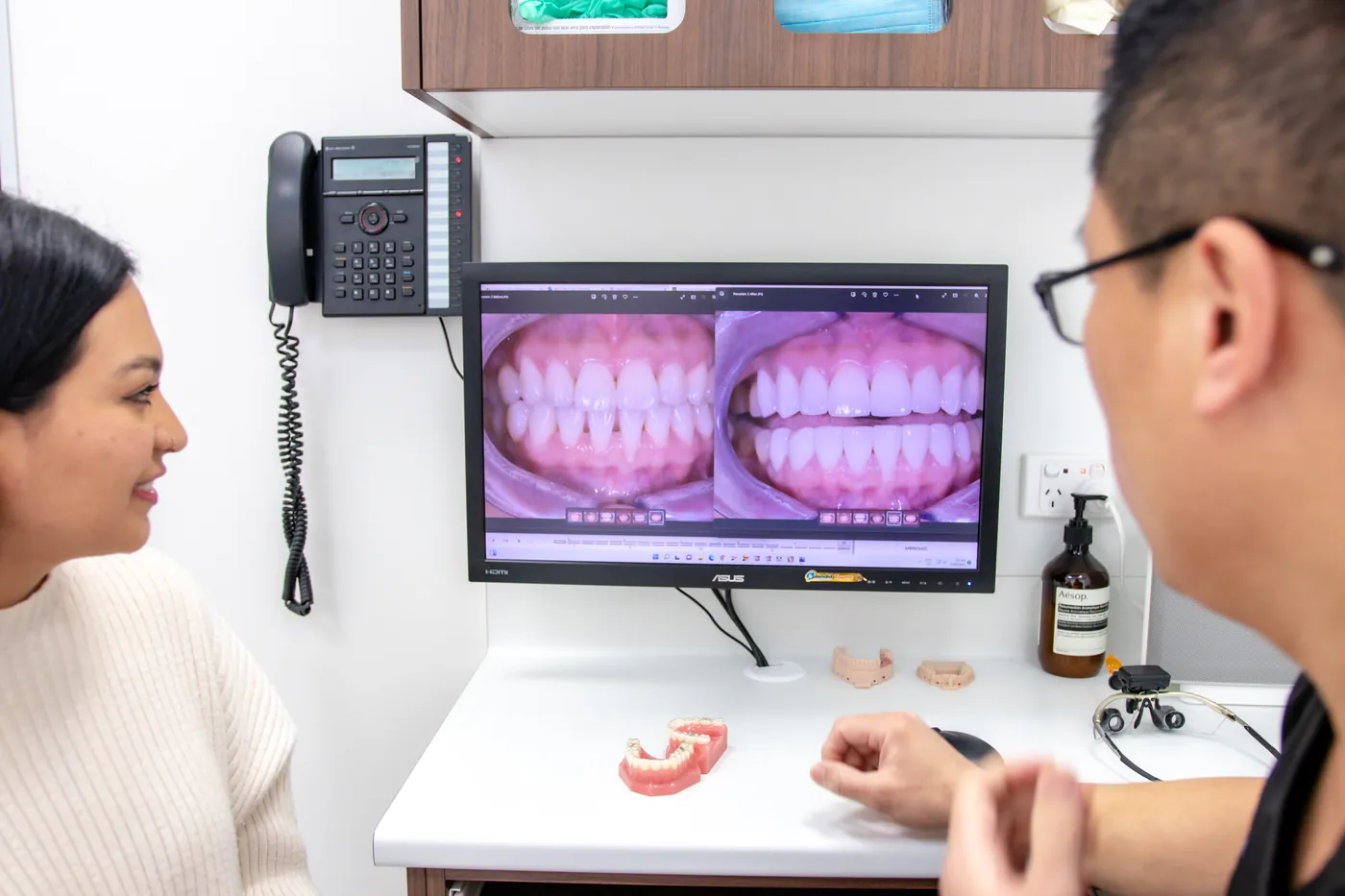
Using our 3D intra-oral scanner or impressions, we record your teeth accurately. Your splint is then made to fit your bite closely.
Fitting
We check the fit and comfort of your splint, adjust your bite on the appliance and show you how to wear and care for it.
Repairing Damage
If grinding has already caused damage, restorations such as fillings, dental crowns or porcelain veneers may be discussed, along with measures to protect them.
Aftercare and Ongoing Care
Wear your splint as directed, usually at night. Clean it each morning with a soft brush and cool water, and store it in its case. Bring it to your check-ups so we can assess its fit and wear. Strategies such as reducing caffeine and alcohol in the evening, relaxation techniques and being mindful of daytime clenching may also help. Jaw exercises or physiotherapy may be suggested in some cases.
Why Choose Precision Dental for Grinding and Clenching
We take a thorough, whole-picture approach, looking at your teeth, jaw, bite and lifestyle. With digital scanning, we can create accurate, comfortable splints, and we monitor your teeth over time as part of your preventive care for adults.
Fees, Health Funds and Payment Options
The cost of your treatment depends on your individual needs. After your examination, we talk you through your options and the expected fees before any treatment begins. We accept most major health funds, process claims on the spot through HICAPS and are a preferred provider for Bupa, HCF and CBHS. Payment plans are available through DentiCare for eligible patients, subject to terms and conditions. You can learn more on our Prices and Payment Options page.
Frequently Asked Questions
Common signs include jaw aches or headaches on waking, worn or chipped teeth, and a partner noticing grinding sounds. We can look for signs at your check-up.
A splint does not always stop grinding, but it helps protect your teeth from wear and reduce pressure on your jaw joints and muscles.
Over-the-counter guards may not fit closely and can sometimes affect the bite. A custom splint is designed specifically for your teeth.
Yes. Repeated grinding and clenching forces can lead to chips and cracks. In some cases, a broken tooth may need restorative treatment.
Stress and anxiety are common contributing factors, along with sleep disorders, caffeine, alcohol and some medications.
Many extras policies with dental cover provide rebates for occlusal splints. We can provide item numbers to help you check.
You may also be looking for

Book Your Visit at Precision Dental
Whether you are due for a routine visit or ready to talk through a treatment you have been considering, our Fortitude Valley team would be glad to welcome you. Call us on (07) 3852 1160 or book online, and we will find a time that suits you.
The information on this page is general in nature and is not a substitute for personalised advice from a registered dental practitioner. Individual needs, experiences and results vary.