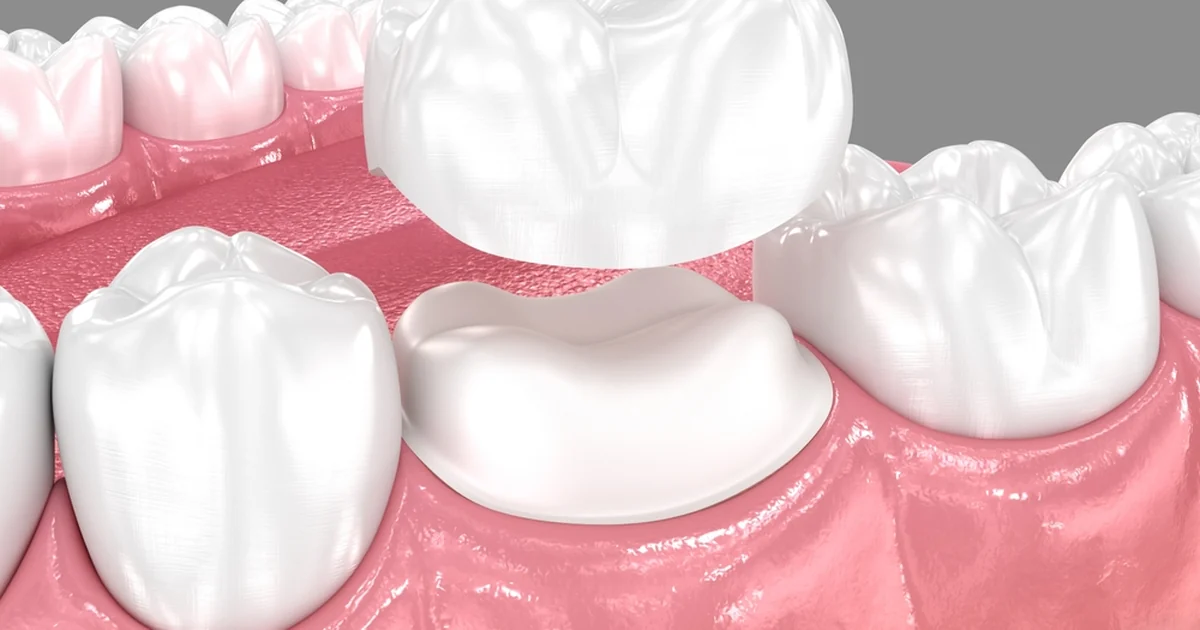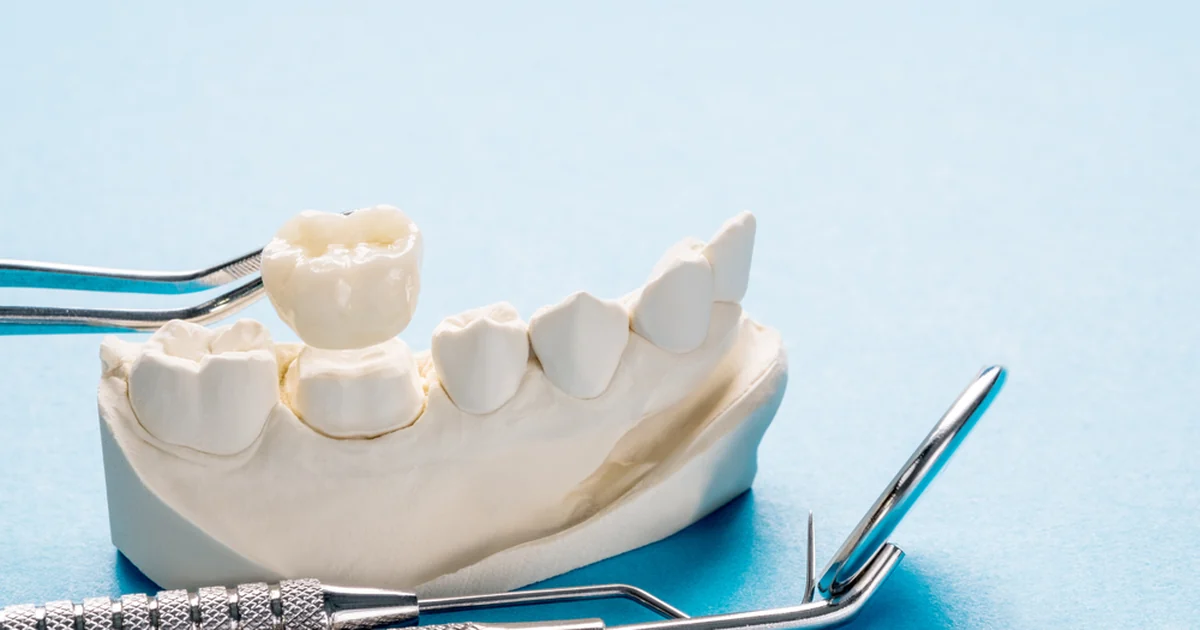
Once you and your dentist have agreed that a tooth needs a crown, a second question follows: what should it be made from? The options sound technical, but the decision comes down to a few practical considerations, chiefly where the tooth sits in your mouth, how much force it takes and how important appearance is in that position.
Here is a plain comparison of the main materials and the factors that guide the choice.
All-Ceramic Crowns
All-ceramic crowns are made entirely from dental ceramic, with no metal underneath. Because light passes through ceramic in a way that resembles natural enamel, these crowns tend to look the most natural, particularly on front teeth where translucency at the edge matters.
Modern dental ceramics are strong, and materials such as lithium disilicate perform well in many situations. Very heavy biting forces or significant grinding may make a more robust material preferable.
With CEREC, many all-ceramic crowns can be designed and milled in the practice, often allowing the crown to be fitted the same day.
Zirconia Crowns
Zirconia is a high-strength ceramic, widely used for back teeth where chewing forces are greatest. It can be milled as a single solid piece, or used as a strong core with porcelain layered over it for a more natural appearance. Because of its strength and low risk of fracture, zirconia is the material we use most often at Precision Dental, with porcelain fused to metal reserved for particular situations, such as some bridges or an unusually deep bite. It is also useful when there is limited space for the crown, because it performs well even when made relatively thin.
Early zirconia was quite opaque, which limited its use at the front. Newer, more translucent versions have improved this, although the most lifelike results in the aesthetic zone usually still come from layered or glass-ceramic options. Zirconia is a common choice for crowns on dental implants.
Porcelain Fused to Metal
Porcelain fused to metal crowns have a metal substructure with tooth-coloured porcelain baked over it. They combine strength with a reasonable appearance and have a long track record. Some are covered with porcelain on every surface, while others carry porcelain only on the surfaces that show, leaving metal on the biting or inner surfaces. Which suits you is worth discussing before the crown is made.
The trade-off is at the gum line. If the gum recedes over the years, a thin dark line where the metal meets the tooth can become visible. The porcelain layer can also chip, exposing the metal beneath.
Gold and Metal Alloy Crowns
Metal crowns are made from alloys rather than pure metals. Alloys with a higher proportion of noble metals, such as gold, platinum and palladium, resist corrosion well in the mouth and are generally regarded as higher quality. Stainless steel crowns are used mostly as temporary or interim crowns, particularly for children's baby teeth.
Gold crowns are rarely chosen for appearance, but they perform exceptionally well mechanically. They are kind to the opposing teeth, resist fracture, and can be made thinner than ceramic, which means less natural tooth needs to be removed.
For a molar right at the back, in a patient who grinds heavily and is not concerned about the colour, gold remains a reasonable choice. Some people simply like the look of a visible gold tooth, which is a matter of personal preference.
What Actually Drives the Decision
Position in the Mouth
Front teeth are judged by appearance, so translucency and shade matching carry more weight. Molars are judged by durability. Premolars sit somewhere between the two.
Your Bite and Grinding Habits
Heavy grinding and clenching favours stronger materials and usually calls for a protective night splint afterwards, whichever material is chosen.
How Much Tooth Remains
Different materials need different thicknesses to be strong, which affects how much natural tooth must be shaped away. Where preserving structure is a priority, that may influence the choice.
Gum Position and Smile Line
If your gum line shows when you smile, the way a crown meets the gum matters more, which is often an argument for an all-ceramic option.
Cost
Fees vary between materials and with whether the crown is made in the practice or by a dental laboratory. We provide a written quote before treatment, and you can find more information on our Prices and Payment Options page, including health fund claiming and payment plans.
What About Matching Existing Teeth?
Shade matching is part of the process. We record the shade of your natural teeth, and for front teeth we can involve the laboratory more closely in layering colour. It is worth knowing that whitening will not change the colour of a crown, so if you plan to whiten your teeth, it is best done beforehand so the crown can be matched to your new shade.
Where several front teeth are involved, we may discuss whether crowns are the right approach at all, or whether porcelain veneers would achieve the result with less tooth removal.
How Long Will It Last?
Longevity varies considerably between people and depends on your oral hygiene, your bite, whether you grind, and how well the margins are maintained. A crown does not protect against decay where it meets the tooth, so daily cleaning and regular check-ups remain essential. All crowns may eventually need replacing.
A Note on Temporary Crowns
When a crown is made by a dental laboratory rather than in the practice, a temporary crown protects the prepared tooth in the meantime. Temporaries are made from acrylic or composite and are cemented with a softer material so they can be removed easily at the fitting appointment.
They are not designed for heavy use. Sticky foods can pull them off, and hard foods can break them. Clean around a temporary carefully, sliding floss out sideways rather than pulling it up through the contact, and let us know promptly if it comes loose, because the prepared tooth can be sensitive and the neighbouring teeth can drift slightly.
Same-day crowns avoid this stage altogether, which is one of the practical reasons patients choose them.
Talk to Us About Your Crown
If you would like to understand which material suits your tooth and why, our team is happy to explain the options in detail. Learn more about dental crowns and bridges, call Precision Dental on (07) 3852 1160 or book online.