Baby teeth matter more than their temporary status suggests. They allow a child to chew and speak properly, they hold space for the adult teeth forming beneath them, and decay in them can cause real pain and infection. Early habits also tend to stick, so the routine you build now shapes how your child treats their teeth for decades.
Here is a practical guide, age by age.
When to Start
Start before the first tooth appears. Wiping your baby's gums twice a day with a clean, damp cloth or a piece of gauze, after feeds and before sleep, removes bacteria and gets them used to having their mouth cared for, which makes the transition to a toothbrush far easier.
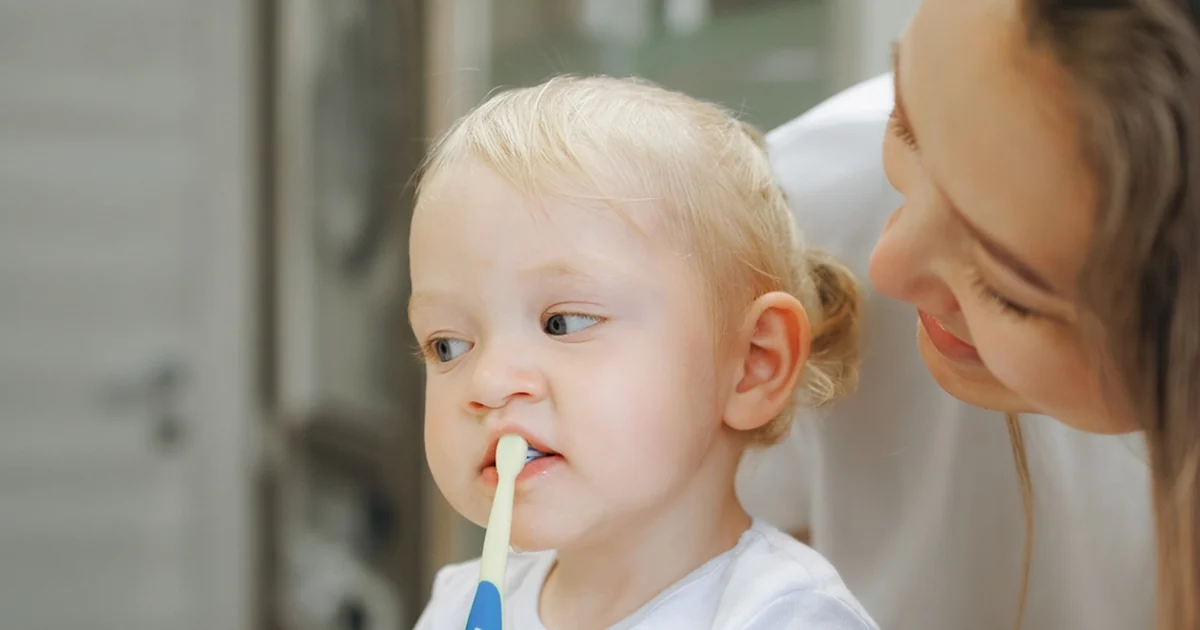
As soon as the first tooth comes through, usually somewhere around six months, begin brushing twice a day, aiming for around two minutes each time as more teeth arrive.
How Much Toothpaste at Each Age
This is the question we are asked most, and the amount matters because young children swallow some of what goes in.
- Under 18 months: brush with water only and a small, soft brush, unless we have advised otherwise for a child at higher risk of decay
- 18 months to 5 years: a pea-sized amount of low-fluoride children's toothpaste, twice daily
- 6 years and over: a pea-sized amount of standard family fluoride toothpaste
Encourage spitting out rather than rinsing, so the fluoride stays in contact with the teeth a little longer. Keep toothpaste out of reach between brushes, as it tastes good enough to be eaten.
Technique
Use a soft-bristled brush designed for toddlers, with a small head and a chunky handle that is easy to grip, and replace it every three months or once the bristles splay.
Angle the brush towards the gum line and use small circular movements, covering the outer surfaces, the inner surfaces and the chewing surfaces. The inner surfaces of the lower front teeth and the outer surfaces of the upper back teeth are the spots most commonly missed.
Children do not have the fine motor control to brush effectively on their own until around eight years of age. Let them have a go first for independence, then do it properly yourself afterwards.
Positions that work well:
- Sit the baby on your lap facing away, with their head resting back against you
- For a toddler, stand behind them at the mirror so you see what you are doing
- Lay a younger child on a bed or on the floor with their head in your lap
Cleaning Between Teeth
Once two teeth touch, a brush cannot reach between them, and that is where decay commonly starts in children. Begin cleaning between those teeth daily, using floss or child-sized interdental brushes. Floss picks are easier for small mouths and for tired parents.
When Brushing Becomes a Battle
Resistance is normal, particularly between two and four. Some approaches that help:
- Brush at the same times every day so it becomes non-negotiable rather than a fresh debate
- Let them choose the brush colour or the flavour of toothpaste
- Use a two-minute song or a timer app
- Take turns: they brush, then you brush
- Brush your own teeth alongside them
- Try earlier in the evening, before overtiredness sets in
- Keep a toy or doll nearby and brush its teeth first
Avoid turning it into a negotiation, and avoid using the dentist as a threat. Children who arrive expecting punishment have a much harder time in the chair.
Habits That Cause Most of the Decay We See
- Bottles at bedtime. Milk or juice pooling around the teeth overnight is the classic cause of early childhood decay. Water only once teeth are present and the bedtime routine is done.
- Frequent snacking. Each sweet or starchy snack restarts the acid cycle. Fewer occasions matters more than smaller portions.
- Juice and cordial through the day. Offer water as the default and save juice for mealtimes.
- Sweetened medicines. Give them at mealtimes where possible and brush afterwards, or ask your pharmacist about sugar-free versions.
- Dummy dipping. Never dip dummies in honey or anything sweet.
What to Watch For
Look at your child's teeth in good light once a week. Early decay often appears as chalky white lines or spots along the gum line, progressing to brown or black areas and holes. Sensitivity, avoiding certain foods, or chewing only on one side are also worth acting on.
Found early, decay may need only a small white filling or preventive treatment. Left alone, it can lead to pain, infection and the loss of a baby tooth well before its time.
Regular Visits
We recommend a first dental visit around your child's first birthday or when the first teeth appear. Early children's dentistry visits are short, friendly and largely about familiarity, and they let us track development and apply preventive treatments such as fluoride varnish and fissure sealants when they are useful.
Eligible families can use the Child Dental Benefits Schedule, which provides benefits towards basic services including check-ups and fillings. Our team can check your child's eligibility before the appointment.
As children grow into sport, a custom mouthguard becomes worthwhile, and accidents are covered by our children's dental emergencies advice.
What Changes as Adult Teeth Arrive
From around six, the first adult molars appear at the back, often without any baby tooth falling out first, so they are easy to miss. They have deep grooves and arrive in a mouth still being brushed by a child, which makes them one of the most decay-prone teeth in the mouth. Point them out at your next visit and ask whether sealants would be useful.
Wobbly baby teeth are best left to come out naturally. Keep brushing around them gently, even if it feels odd, as plaque gathers quickly around a loose tooth and the gum can become sore.
Mixed dentition, where baby and adult teeth sit side by side, can look crowded or crooked. That is often normal at this stage, and we will tell you if anything needs monitoring.
Book Your Child's Check-Up
Whether it is a first visit or a routine check-up and clean, we would be glad to see them. Call Precision Dental on (07) 3852 1160 or book online.