"Check-up and clean" is one of those phrases that gets used constantly without ever being explained. If you have not been for a while, or you are choosing a new practice, it is fair to want to know exactly what the appointment involves before you sit in the chair.
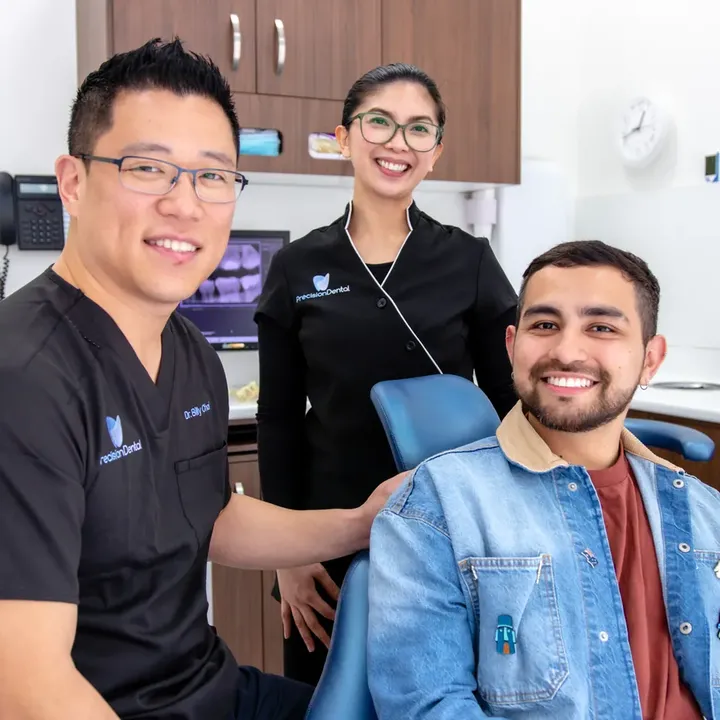
Here is what happens during a typical visit at our Fortitude Valley practice, and why each part matters.
A Conversation First
Your appointment starts with a discussion rather than an instrument. We ask about your general health, any medications you take, and whether anything has changed since your last visit. This is not a formality. Medications that cause dry mouth raise your decay risk, pregnancy affects the gums, and conditions such as diabetes influence how gums respond to treatment.
We also ask what you have noticed yourself: a sensitive tooth, bleeding when you floss, a sharp edge, clicking in your jaw, or something about your smile you would like to change one day. Small observations often point us to the right place.
The Examination
We then examine systematically, starting outside the mouth.
Outside the Mouth
Before anything else, we check the lymph nodes in your neck, feel under the jaw for swelling or asymmetry, and palpate the muscles and joints of your jaw. These checks take moments and occasionally pick up something that matters.
Your Teeth
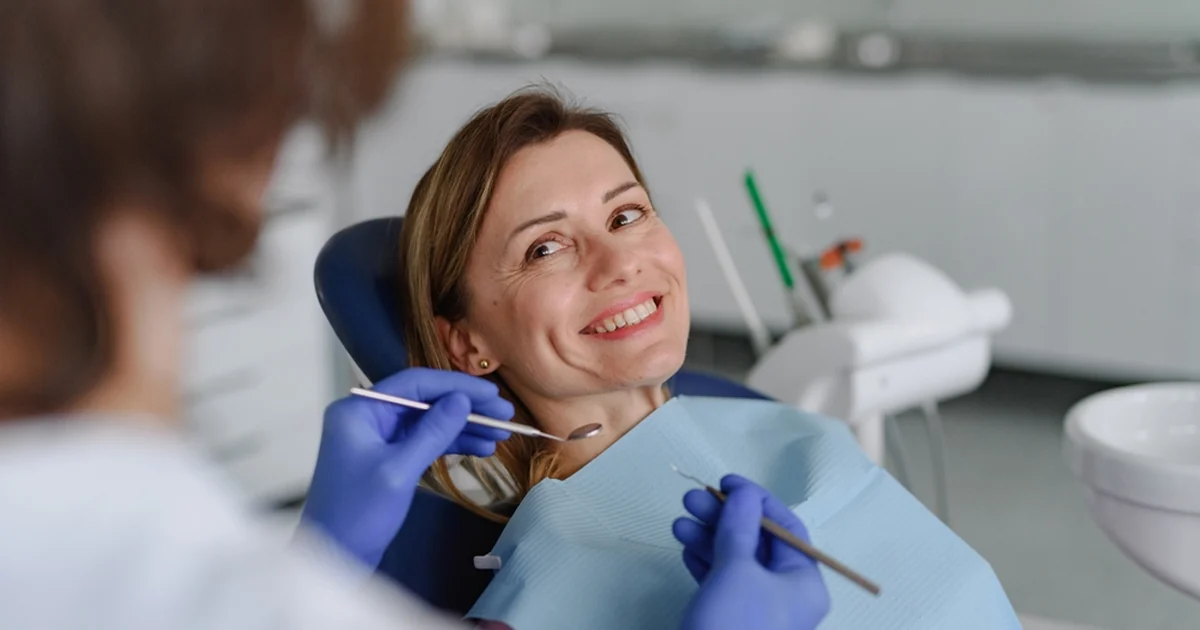
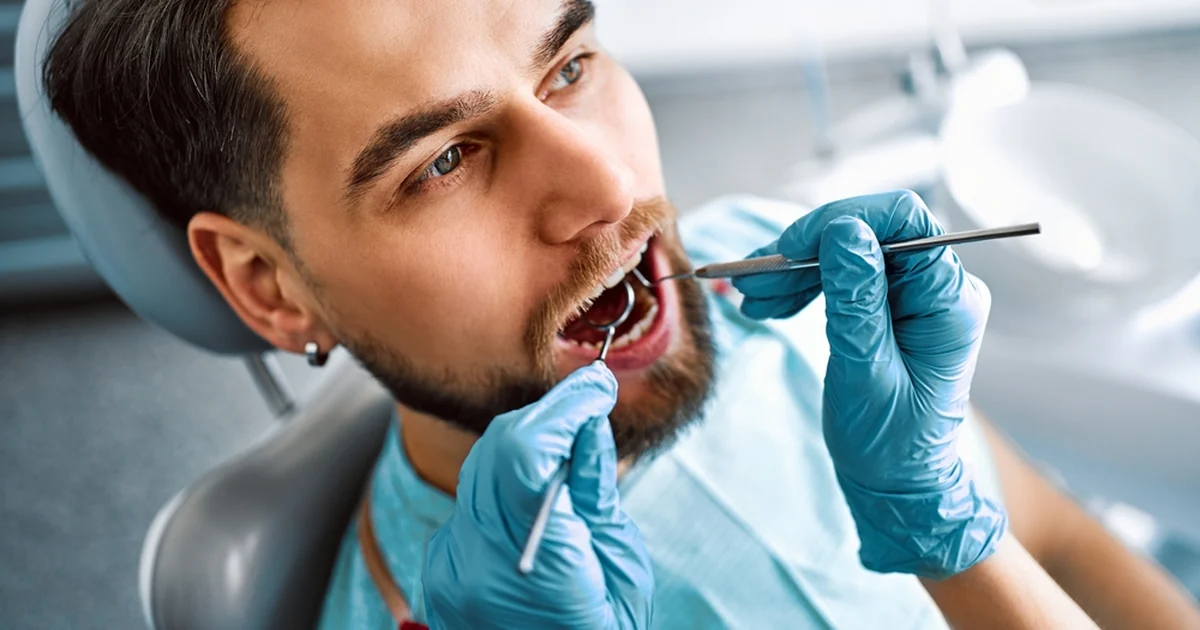
Each tooth is checked for decay, cracks, wear and chips, and every existing filling, crown or bridge is assessed for leaking edges or breakdown. We chart each tooth individually and record the treatment it has had before, which builds a history we can compare against at future visits. We look at the surfaces between teeth, where decay commonly starts, and at the gum line, where recession can expose softer root surfaces.
Your Gums
We check the colour and texture of your gums and measure the depth of the space between gum and tooth in several places. Bleeding points are recorded. These measurements, repeated at each visit, tell us whether your gum health is stable, improving or getting worse.
Your Bite and Jaw
We look at how your teeth meet, check for wear patterns that suggest grinding and clenching, and assess your jaw joints and muscles for tenderness or clicking.
Soft Tissues
Your tongue, cheeks, lips, palate and the floor of your mouth are examined for ulcers, unusual patches or changes in texture. This is a routine part of every check-up.
Images, When They Are Needed
Digital X-rays are recommended based on your individual risk rather than automatically at every visit. They show what we cannot see directly: decay between teeth, the bone level around each tooth, infections at root tips, and the position of wisdom teeth.
We may also use our intra-oral camera to take close-up photographs and show them to you on screen. Most people find it much easier to understand a recommendation when they can see what we are describing.
The Clean
The clean, sometimes called a scale and polish, removes what brushing cannot.
- Scaling uses an ultrasonic instrument and fine hand instruments to remove plaque and hardened tartar from above and just below the gum line.
- Polishing smooths the tooth surfaces with a soft cup and paste, lifting surface stains from coffee, tea and other sources.
- Flossing clears any remaining debris between the teeth.
- Fluoride, in a varnish or gel, may be applied afterwards to strengthen enamel or reduce sensitivity.
If your gums are inflamed, parts of the clean may feel tender. Tell us and we will adjust our approach, work in stages, or discuss anaesthetic. For patients who find appointments stressful, our care for anxious patients includes extra time and the option of happy gas.
Where we find deeper pockets and signs of periodontitis, a standard clean is not enough. In that case we will explain why gum and periodontal treatment is recommended instead, and what it involves.
Your Findings and Plan
At the end of the visit we tell you what we found, in plain terms. If everything is healthy, we will say so. If treatment is recommended, such as a white filling, we explain why, what the alternatives are, and what the expected cost will be before anything is booked.
You will also get advice tailored to your mouth rather than generic instructions: the brushing technique that suits your gum recession, the interdental brush size that fits your spaces, or the drink habit that is quietly eroding your enamel.
Finally, we agree on when to see you next. Many people are suited to six-monthly visits, while others benefit from three or four monthly maintenance, and some can safely go longer.
How Long It Takes, and Who It Suits
Most check-up and clean appointments take between 30 and 60 minutes depending on your needs and whether X-rays are taken. Children are welcome too, and our children's dentistry visits follow the same structure at a pace that suits them. Families may be eligible for benefits under the Child Dental Benefits Schedule, and our team can check that before your appointment.
What the Appointment Does Not Include
It is worth being clear about the boundaries of a check-up and clean, because expectations vary.
Treatment such as fillings, crowns or extractions is not carried out during the same visit. We diagnose, explain and quote, then book the appropriate appointment time for the work.
Deep cleaning below the gum line for periodontitis is a separate, longer procedure, often requiring anaesthetic and more than one visit. A routine clean cannot substitute for it.
Whitening, cosmetic work and orthodontic assessments are also planned separately, although we are happy to discuss them at your visit and arrange a consultation.
Book Your Check-Up and Clean
If you are due for a visit, or it has been longer than you would like, we would be glad to see you. Call Precision Dental on (07) 3852 1160 or book online.