
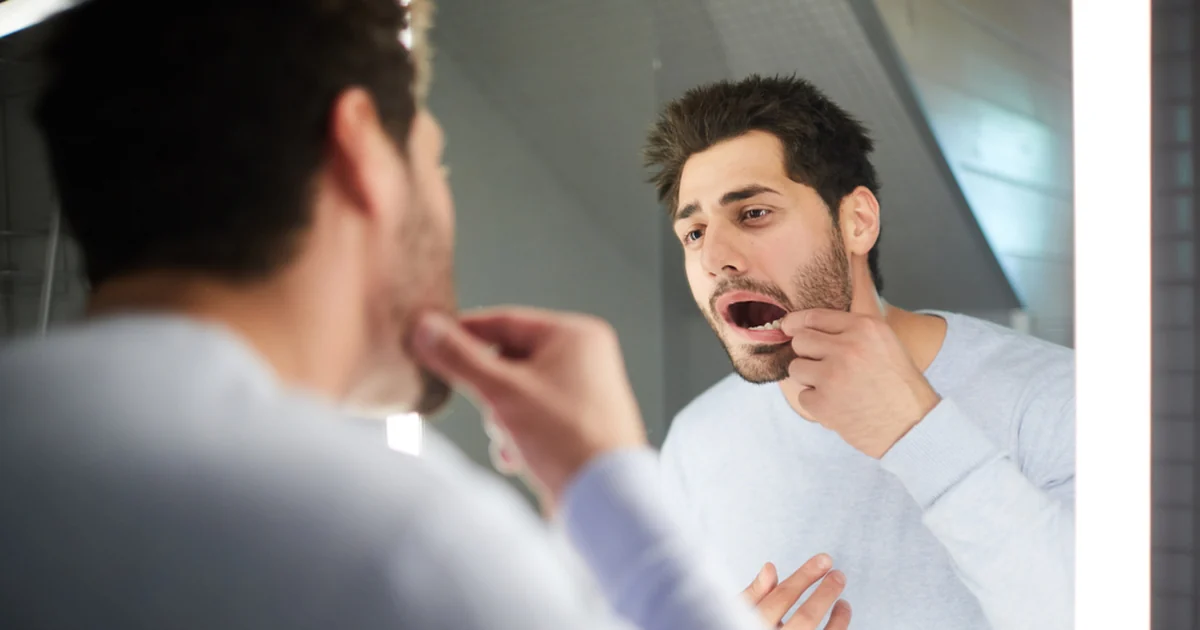
Mouth ulcers, also called aphthous ulcers or canker sores, are small, painful lesions on the soft tissues of the mouth. They are extremely common, usually harmless, and typically heal on their own within one to two weeks.
They are also disproportionately annoying for their size, so here is what causes them, what genuinely helps while they heal, and the circumstances in which one needs looking at.
What They Are, and What They Are Not
Mouth ulcers appear inside the mouth, on the cheeks, tongue, lips or floor of the mouth. They are typically round or oval with a white or yellowish base and a red border.
They are not cold sores. Cold sores are caused by the herpes simplex virus, usually appear on or around the lips rather than inside the mouth, begin with a tingling sensation and form blisters before crusting. Cold sores are contagious; mouth ulcers are not.
Common Triggers
- Minor trauma. A cheek bitten while eating, a toothbrush slip, a sharp edge from a broken tooth, a rubbing denture or an aligner edge
- Stress and fatigue, which many people recognise as a reliable pattern
- Hormonal changes
- Certain foods, commonly acidic or spicy foods, chocolate, tomatoes and some nuts
- Toothpaste containing sodium lauryl sulphate, which triggers ulcers in some people
- Nutritional deficiencies, particularly iron, vitamin B12, folate and zinc
- Stopping smoking, which often causes a temporary increase
- Certain medical conditions, including coeliac disease and inflammatory bowel conditions, and some medications
Often no cause is identified at all, which is normal.
Easing the Discomfort
Nothing makes an ulcer disappear overnight, and claims to the contrary are worth treating with scepticism. The sensible aim is to reduce irritation while the tissue heals.
Rinse with warm salt water. Half a teaspoon of salt in a cup of warm water, a few times a day. Simple and genuinely soothing.
Avoid irritants. Acidic, spicy, salty, crunchy and very hot foods will all aggravate an ulcer. Cool, soft foods are easier.
Use a soft toothbrush and keep brushing. A clean mouth heals better, even if cleaning near the ulcer is uncomfortable.
Try an SLS-free toothpaste if you get ulcers frequently. For some people this reduces how often they occur.
Pharmacy products such as protective gels or pastes form a barrier over the ulcer, and anaesthetic gels numb it briefly. Your pharmacist can advise what suits you.
Ice or cool water held against the area offers temporary relief.
Avoid applying aspirin or other tablets directly to the tissue, which burns it. Strong undiluted essential oils, neat bicarbonate pastes and alcohol-based rinses tend to make things worse rather than better.
Preventing Recurrences
If ulcers are frequent, a few practical steps often help:
- Keep a short diary of foods and circumstances to identify a pattern
- Switch to an SLS-free toothpaste for a few months and see whether it makes a difference
- Address anything physically rubbing: a sharp tooth edge, an ill-fitting denture or an aligner that needs smoothing
- Manage stress and sleep where you can
- Ask your GP about blood tests if ulcers are frequent and severe, as deficiencies are a treatable cause
When to See a Dentist
Book an appointment if:
- An ulcer has not healed within two weeks
- It is unusually large, or keeps recurring in the same spot
- You have many ulcers at once, or they are so painful you cannot eat or drink properly
- There is a lump, a hard edge, or the area bleeds easily
- You also feel generally unwell, or have a fever or a rash
- Something in your mouth is physically causing it, such as a broken tooth, a denture that rubs or a sharp edge
The two-week rule matters. Most ulcers heal well within that time, and an area that does not should be examined rather than watched indefinitely. We check the soft tissues of your mouth at every check-up and clean for exactly this reason, and we will arrange further investigation or referral if anything warrants it.
If the Cause Is Mechanical
Many of the ulcers we see have a straightforward physical cause. Smoothing a sharp cusp, adjusting a denture, easing the edge of an Invisalign aligner or treating an area of gum and periodontal treatment often stops the cycle entirely.
Ulcers Under Dentures and Appliances
A particular category worth separating out is the ulcer caused by something rubbing. These are usually in the same spot every time, often along the edge of a denture, beneath a clasp, or where an aligner or a retainer presses.
The important point is that no amount of rinsing or gel will resolve an ulcer that is being re-created daily by pressure. The appliance needs adjusting, and that is usually a short appointment.
If you have a new denture, some sore spots in the first weeks are normal and are exactly what review appointments are for. Do not persevere through them for weeks in the hope they settle, and do not adjust the appliance yourself.
Book an Appointment
If an ulcer is not settling, or something in your mouth keeps causing them, we can take a look. Call Precision Dental on (07) 3852 1160 or book online.