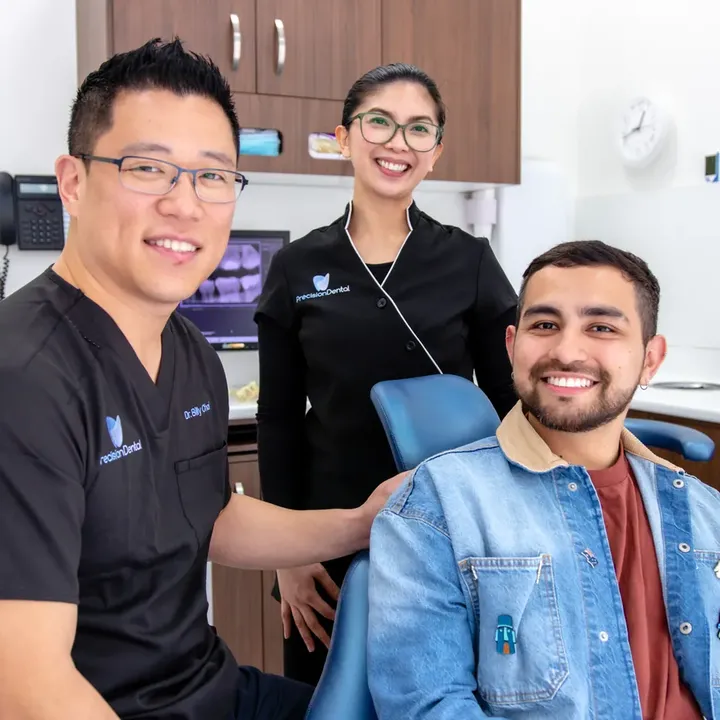

Father's Day is as good a prompt as any to look at a pattern we see constantly: men attending less often, presenting later, and arriving with problems that were straightforward a year earlier.
None of what follows is complicated. It is mostly about not postponing.
Why Later Is More Expensive
Dental problems are almost entirely silent in their early stages. Decay has no nerve supply to warn you until it reaches the inner layers. Gum disease is painless until teeth begin to loosen, by which point the bone loss is permanent.
That is the entire argument for regular check-ups. The same problem, found at three different points, might need a filling, a crown, or extraction and replacement. Attending only when something hurts means always being at the expensive end of that sequence.
Habits Worth Checking
Brushing Technique
Scrubbing hard is the most common fault, and it wears enamel at the gum line and pushes gums back. A soft brush, angled at 45 degrees towards the gum, with small movements and light pressure, does a better job. Two minutes, twice a day.
Cleaning Between Teeth
A brush reaches three of the five surfaces of each tooth. The two it misses are where a large share of decay and gum disease starts. Floss, interdental brushes or a water flosser, once a day. If this is the single thing you change, it is the right one.
Spit, Do Not Rinse
Rinsing with water after brushing washes away concentrated fluoride that would otherwise keep working. Spit out the excess and leave it.
Drinks
Sports drinks, energy drinks, soft drinks and even sparkling water with added flavour are acidic. Sipping them over hours keeps the mouth acidic for most of the day. Water should be the default, with sweet or acidic drinks kept to mealtimes.
Teeth as Tools
Opening bottles and packaging with teeth accounts for a notable proportion of the fractures we see. It is an easy habit to drop.
Grinding Under Pressure
Stress-related grinding and clenching is common, and most people have no idea they do it. The signs are morning jaw ache, headaches around the temples, flattened or chipped teeth, increasing sensitivity, and restorations that keep breaking.
A custom night splint will not stop the habit, but it protects the teeth from forces that otherwise wear them down permanently. If any of that sounds familiar, mention it at your next appointment.
Sport
If you still play, wear a mouthguard. Custom mouthguards fit closely enough to be worn without irritation, which is why they get used rather than left in the bag. The cost of a guard is a fraction of the cost of restoring a broken front tooth, and some dental injuries have consequences lasting decades.
Smoking and Alcohol
Smoking is a leading risk factor for gum disease, slows healing after any dental procedure, and masks bleeding that would otherwise signal a problem early. Heavy alcohol intake raises oral cancer risk, and the two together multiply it. Every examination includes a soft tissue check for this reason.
You Are Being Watched
Children learn oral hygiene largely by copying. Brushing alongside them, letting them see you floss, and talking about dental visits as routine rather than dreaded all make a measurable difference to how they approach it later.
Avoid using the dentist as a threat, and avoid words like needle and drill in front of younger children, even reassuringly. Our children's dentistry visits are built around keeping those associations neutral.
A Note on the Mouth and General Health
Oral health does not sit apart from the rest of your body, and a few connections are worth knowing.
Periodontal disease has well-documented associations with diabetes, and the relationship runs both ways: poorly controlled blood sugar makes gum disease harder to manage, and treating gum disease can support better glycaemic control.
Research has also identified associations between gum disease and cardiovascular disease, though association is not the same as cause.
Every dental examination also includes a soft tissue check of the tongue, cheeks, palate and floor of the mouth, looking for anything that has not healed within two weeks. This is a routine part of the appointment and one of the practical reasons attending regularly matters.
A Simple Plan
- Book a check-up and clean if it has been more than a year
- Clean between your teeth daily, starting tonight
- Switch the default drink to water
- Get grinding assessed if you wake with jaw ache
- Wear a mouthguard for sport
- Deal with the niggling tooth now rather than when it becomes an Emergency Dentistry appointment at an inconvenient moment
If gum bleeding has been going on for a while, have it assessed rather than ignored, as gum and periodontal treatment is far simpler at the early stage.
If It Has Been a Long Time
A gap of five or ten years is more common than you would think, and the longer it goes the harder the first step feels. Two things usually help.
First, the initial visit is an examination and a conversation, not treatment. You will find out where things stand and get a written plan with costs, and you decide what happens next and when.
Second, problems found early are almost always cheaper and simpler than problems found late. Whatever is going on, it will not improve by waiting another year.
If anxiety is the obstacle, say so when you book. It changes how the appointment is structured, and that makes a real difference.
Book an Appointment
No lectures, no judgement about how long it has been. Call Precision Dental on (07) 3852 1160 or book online.