
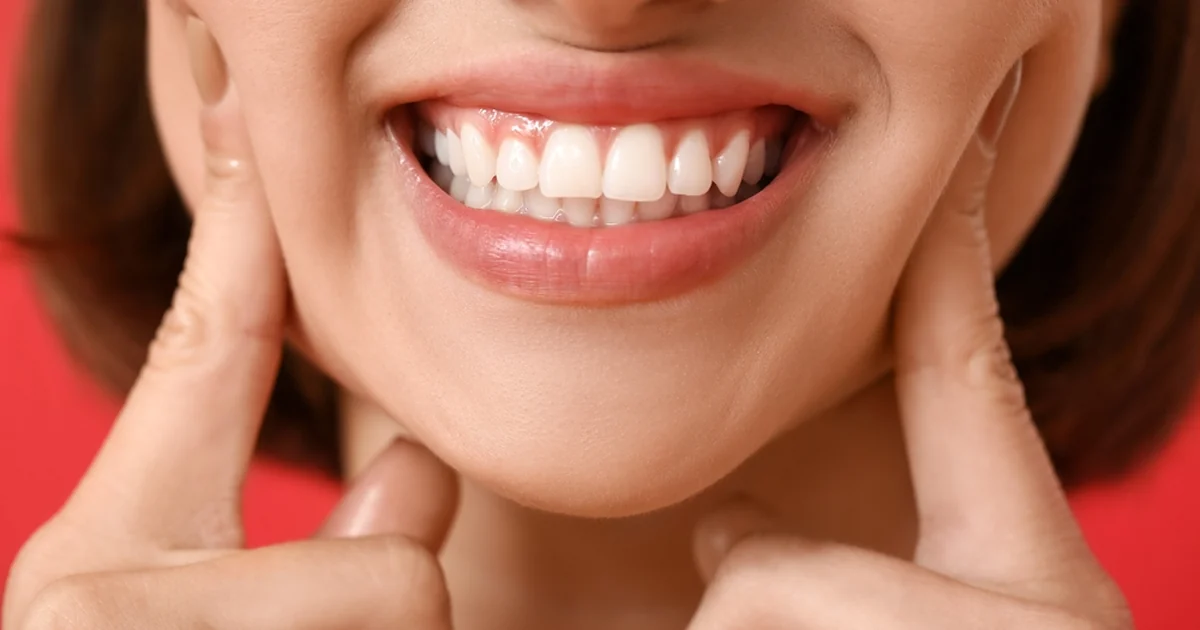
Most advice about whiter teeth jumps straight to treatment. Before that, there is a good deal you can do to limit how quickly stain accumulates, and it makes any whitening you do have last considerably longer.
Where Surface Stain Comes From
Enamel is not perfectly smooth. Its surface holds a thin protein film, and pigments from food and drink bind to it. The usual contributors are predictable:
- Coffee and tea, including green tea
- Red wine
- Dark cola and some sports drinks
- Berries, beetroot, soy sauce, balsamic vinegar and curries
- Tobacco in any form
Anything that would stain a white shirt will, given time, stain teeth.
Habits That Limit Staining
Rinse with water after staining food and drink. The simplest and most effective habit on this list.
Do not sip across hours. A coffee nursed over a morning gives pigments far longer to bind than the same coffee finished in ten minutes. The same applies to acid exposure.
Use a straw for cold staining drinks. It reduces contact with the front teeth.
Wait before brushing. After anything acidic, enamel is temporarily softened. Brushing straight away wears it, and thinner enamel looks more yellow, not less. Rinse, then wait around 30 minutes.
Finish a meal with something neutral. Cheese, milk or water helps buffer acid and clear pigments.
Clean between your teeth daily. Stain and plaque accumulate first at the contact points between teeth, where it shows as dark lines.
Products: What Helps and What Does Not
Whitening toothpastes work by mild abrasion and sometimes by adding polishing agents. They remove surface stain and can maintain brightness, but they do not change the natural colour of the tooth. Choose a product with a low abrasivity if you use one daily.
Charcoal pastes are abrasive. Abrasion removes stain and, over time, enamel. Thinner enamel reveals more of the yellower dentine beneath, so the long-term result is often the opposite of the intention.
Bicarbonate, lemon juice and vinegar remedies either abrade or erode. Both damage enamel permanently.
Electric toothbrushes help indirectly by improving plaque removal, which keeps surfaces cleaner.
Whitening strips from the supermarket use low concentrations and poorly fitting trays, so results are usually modest and uneven, and the gel often irritates the gums.
Why Teeth Change Colour Anyway
Not all discolouration is surface stain. Enamel thins gradually with age and wear, and the dentine beneath it is naturally more yellow and becomes more so over time. That is internal colour, and no amount of brushing or polishing changes it.
A single dark tooth usually indicates something different again, often a nerve that has died after an old injury, which is worth having assessed.
Where Professional Care Fits
A professional check-up and clean removes tartar and polishes away surface stain, which for many people produces a noticeable improvement before any gel is involved. It also means whitening, if you go ahead with it, works on a clean surface rather than through a layer of plaque.
Professional teeth whitening addresses internal colour. Custom-fitted trays keep the gel on the teeth and off the gums, which is the main reason it outperforms over-the-counter kits.
Where discolouration does not respond to whitening, such as certain internal stains or a chipped, worn front tooth, composite resin veneers or porcelain veneers may be more realistic. We would rather tell you that before you spend money on whitening that will not achieve it.
Two Things Worth Knowing
Whitening has no effect on existing white fillings, crowns or veneers, so restorations on front teeth may need replacing afterwards to match. And whitening should always follow treatment of any decay or gum and periodontal treatment, as gel on inflamed gums or exposed dentine is genuinely uncomfortable.
What Realistic Maintenance Looks Like
If you have had whitening and want to hold the result, the routine is not onerous.
Keep your custom trays and use them for a short top-up every several months, or whenever you notice the shade drifting. Because the trays last for years, the ongoing cost is only the gel.
Keep your regular professional cleans, as surface stain accumulates steadily and polishing removes it. Many people find the clean alone restores most of what they thought they had lost.
Beyond that, it is the daily habits: rinse after staining drinks, do not sip across hours, use a soft brush and a low-abrasion toothpaste, and clean between your teeth so stain does not build at the contact points.
Sensitivity and Whitening
The most common reason people stop a course of whitening is sensitivity, and it is usually manageable rather than a reason to abandon it.
Start a desensitising toothpaste a week or two before whitening, and use it throughout. Spit rather than rinse so the active ingredients stay on the teeth. If sensitivity builds, shorten the daily wear time or skip a day rather than pushing through.
Tell us if it persists, as there may be a specific cause such as gum recession, a worn area at the gum line or an untreated crack that is worth addressing separately.
Ask Us What Is Realistic
If you would like an honest assessment of what your teeth are likely to respond to, book a consultation. Call Precision Dental on (07) 3852 1160 or book online.